Overview
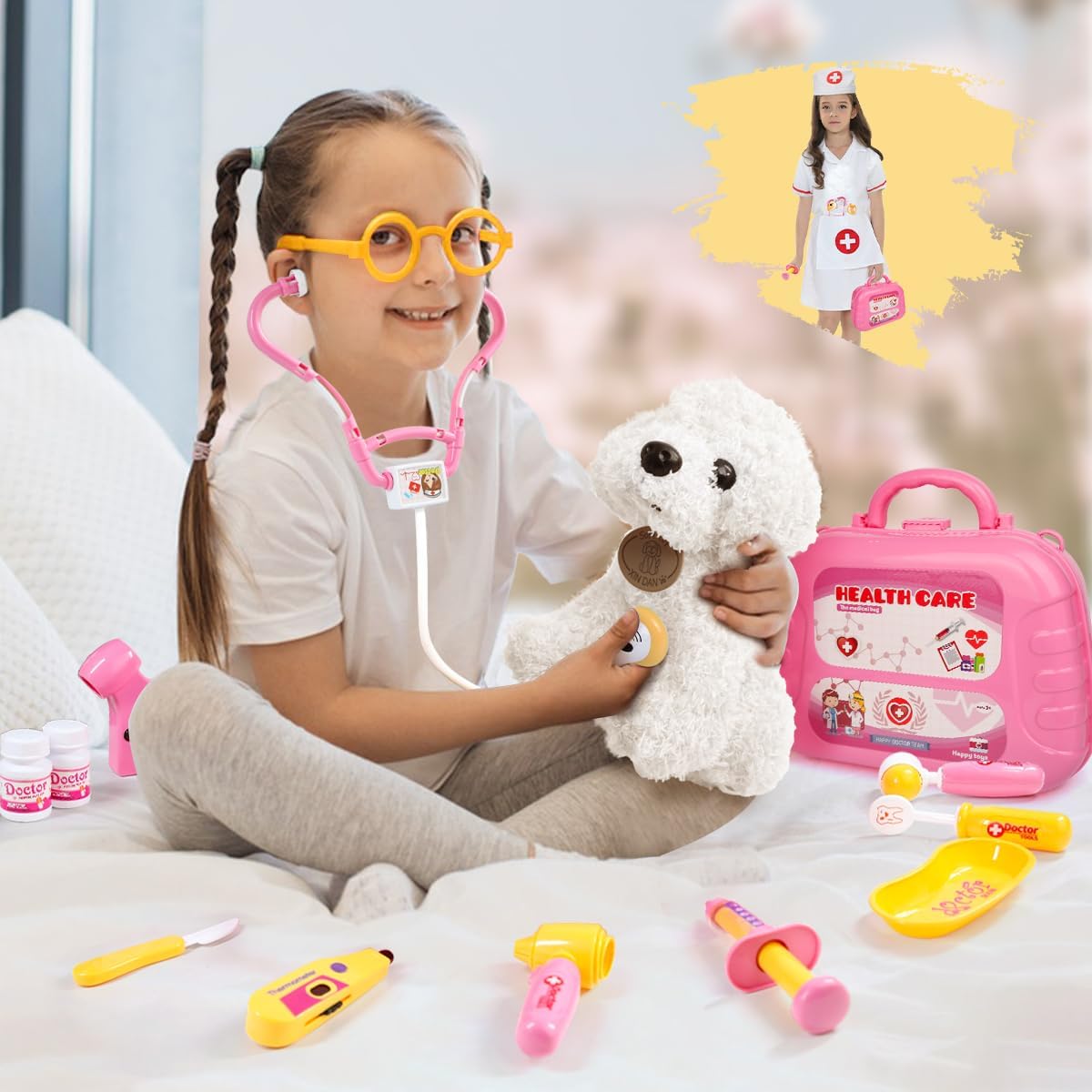
The Meland Toy Doctor Kit is a pretend-play set built around doctor, nurse, dentist, and veterinarian scenarios. Its central play idea is caring for a puppy doll while wearing a doctor costume and using toy examination tools. The product title presents it as a veterinarian playset for girls, while the listing also describes broader medical role-play with children taking turns as doctors, patients, or caregivers.
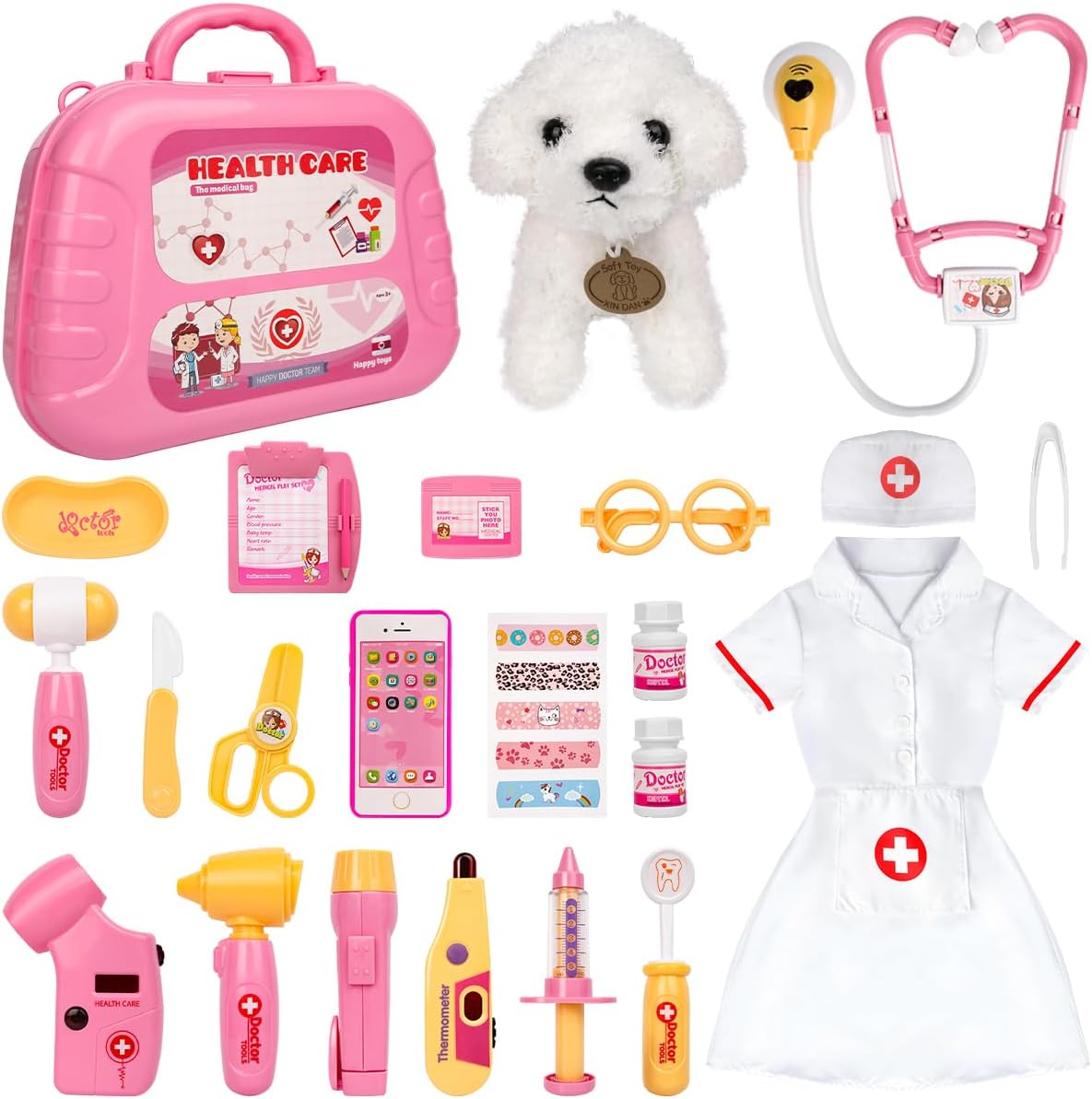
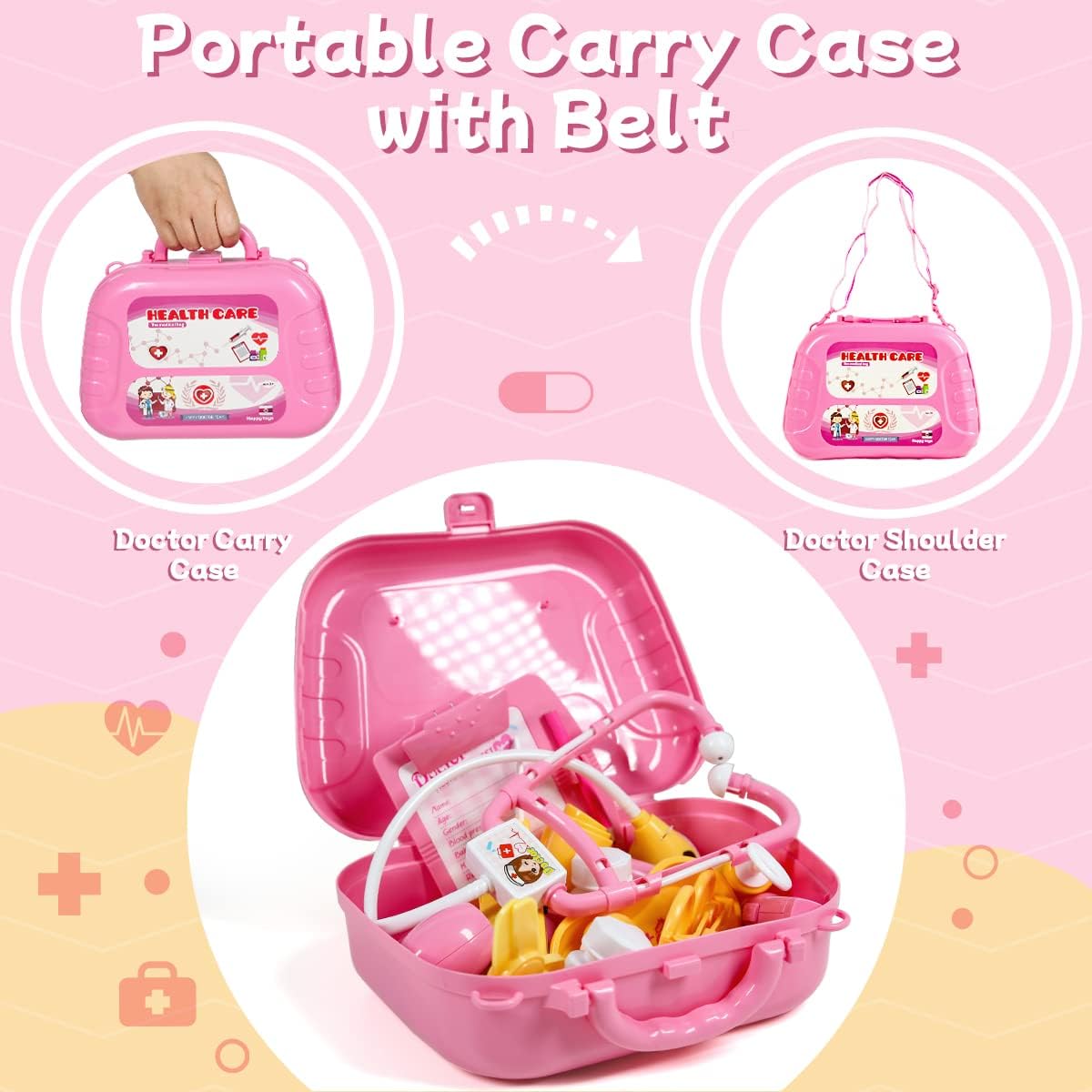
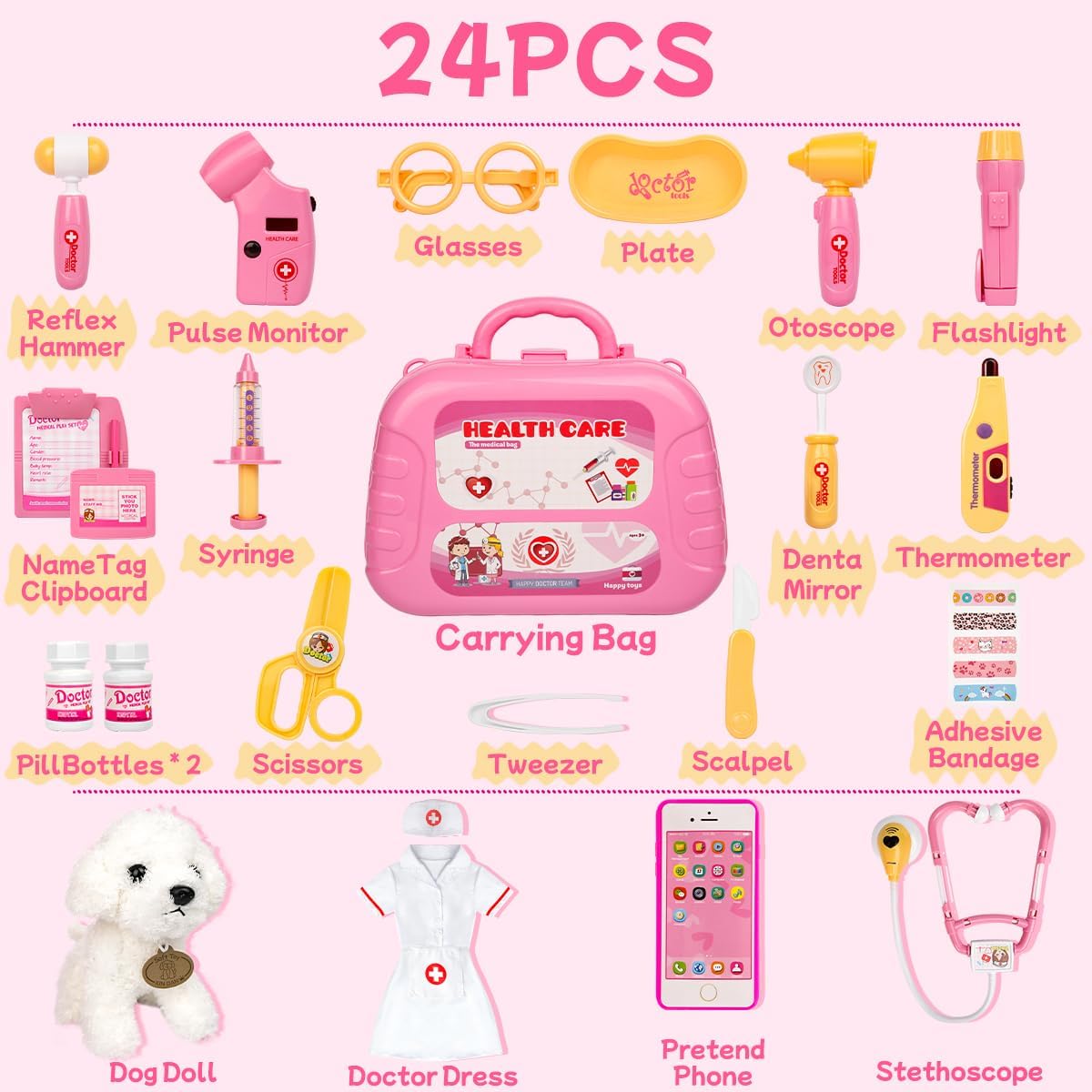
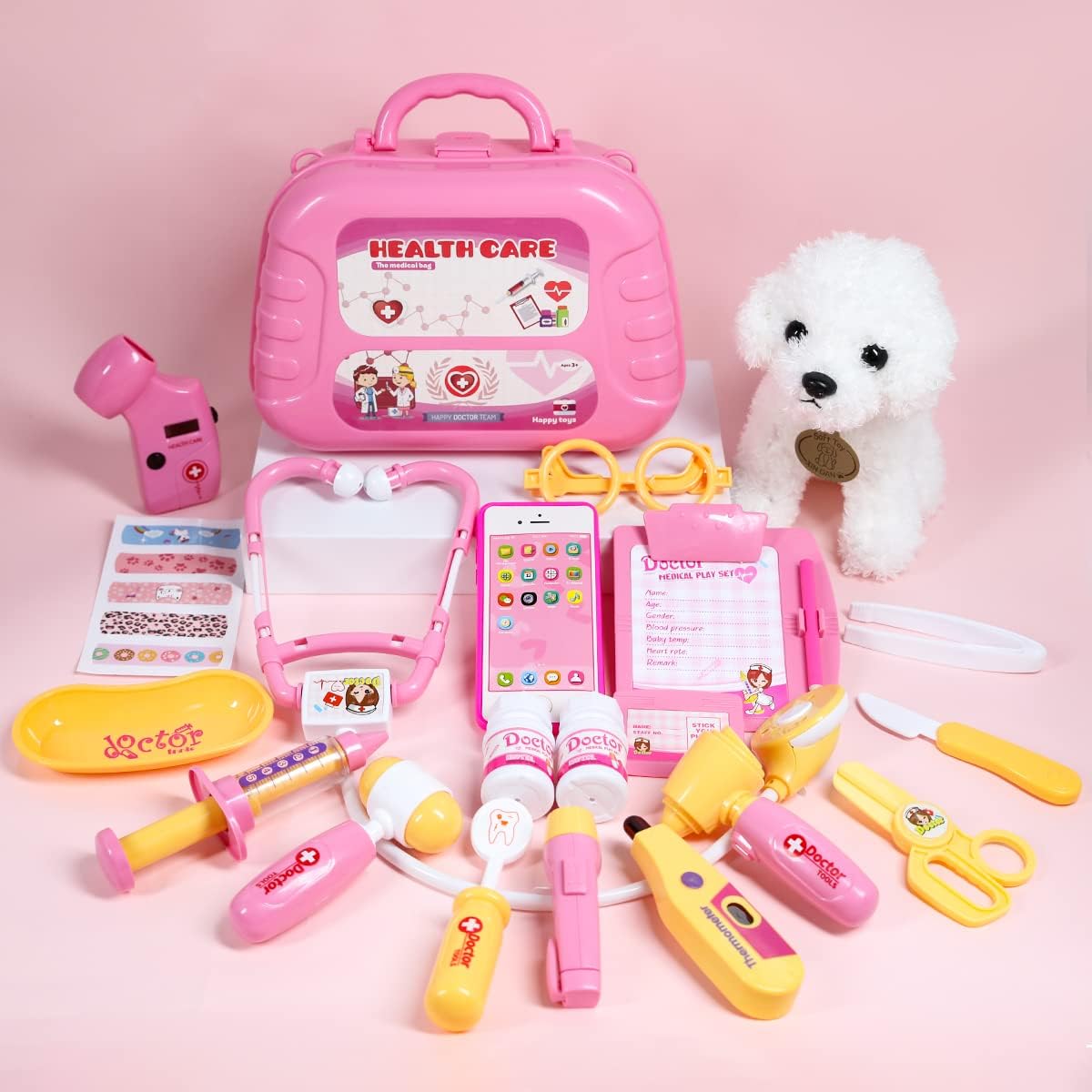
According to the listing, the set includes a doctor coat and hat, a fluffy puppy doll, and a portable carrying case intended to hold the play tools. The described accessories include a toy stethoscope, syringe, thermometer, flashlight, pretend phone, dentist toy, tweezers, scissors, and eyeglasses. The listing also refers to an adjustable thermometer and a stethoscope with sound. These details come from the product listing and were not independently verified by Cerebus Art.
The stated audience is preschool children. The title identifies ages 3, 4, 5, and 6, while the description separately uses “toddlers 3-5.” That inconsistency is worth resolving with the manufacturer or seller, particularly because costume fit, accessory design, and supervision needs can vary for children within that span.
Doctor, veterinarian, dentist, patient, and pet-care role-play are the scenarios described in the listing.
A puppy doll, doctor costume, carrying case, and several toy medical accessories are described.
The title says ages 3–6; another listing section says toddlers 3–5. Confirm the current guidance.
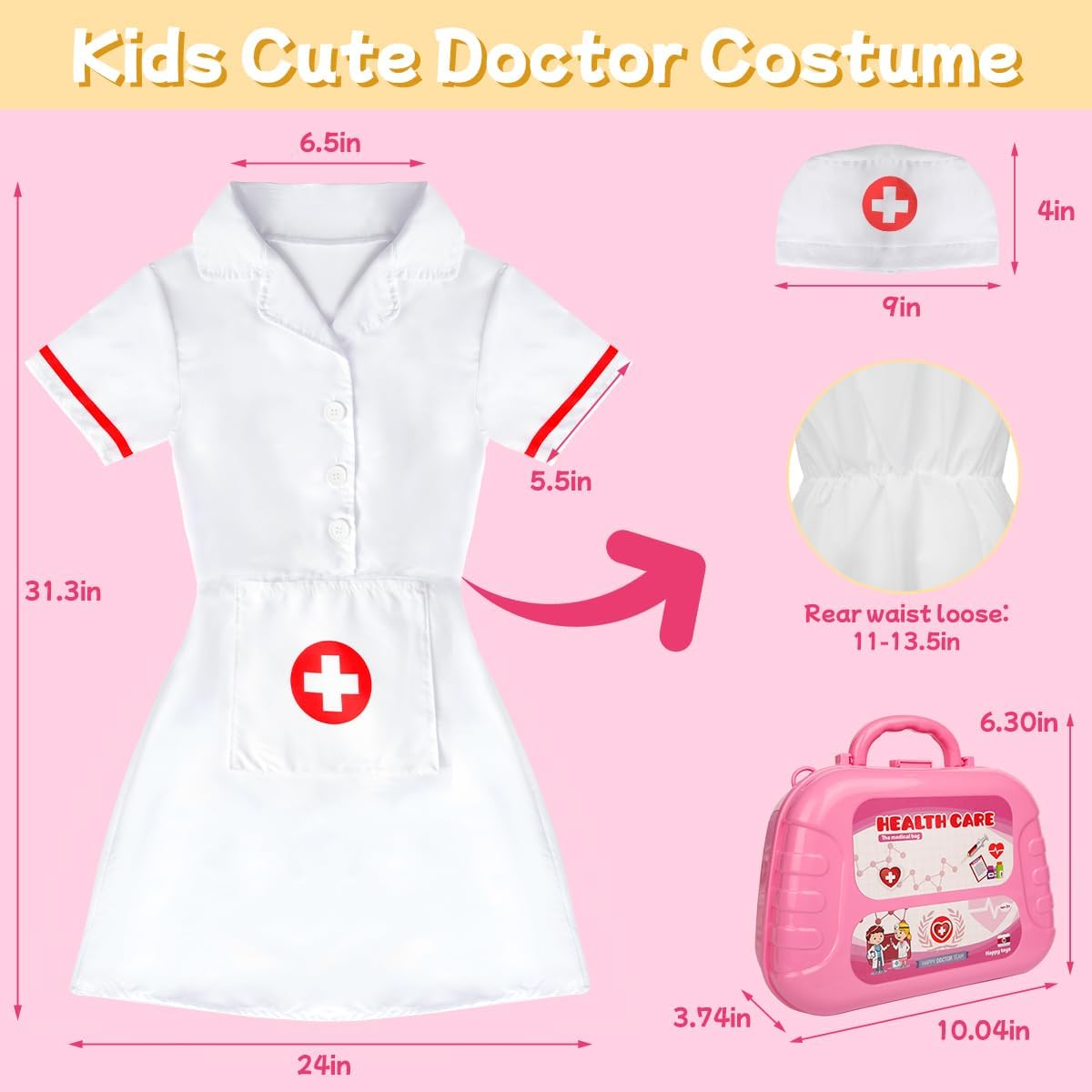
The listing does not provide enough verified information here about materials, exact piece count, dimensions, or costume sizing.
Who may find it useful
This set may be worth considering for a child who enjoys dress-up, pretend appointments, animal-care stories, or organizing play props in a case. The included puppy theme gives children a patient to examine, while the coat and hat establish a recognizable role. Families looking for an indoor activity that can be played alone or with an adult may also want to examine it.
It could support several types of imaginative setup without requiring a single storyline. A child might act as a veterinarian checking the puppy, switch roles and become the patient, or use the dentist-themed accessory in a separate scene. Siblings or adults could participate as pet owners or patients. These are possibilities suggested by the listed components, not guaranteed outcomes.
The costume may matter as much as the tools for children who enjoy role-play clothing. Before choosing the set, caregivers should consider whether the child is comfortable wearing a coat and hat and whether the available size will fit over ordinary clothing. The listing does not provide enough sizing information in the supplied material to judge fit.
What to examine before buying
Because the available description is broad, prospective buyers should compare the current product page with the package or manufacturer information. Pay particular attention to:
- Exact contents: The listing names many accessories, but it does not establish a verified piece count in the supplied information. Check whether every pictured or named item is included.
- Age guidance: Reconcile the 3-to-6 age range in the title with the separate reference to ages 3 to 5. Use the current manufacturer guidance rather than relying only on the marketing title.
- Small parts: Ask whether any accessories are small enough to create a choking concern for younger children or children who still mouth objects.
- Costume details: Confirm the coat and hat measurements, closure style, and whether the costume is intended to fit over other clothes. The supplied listing does not state these details.
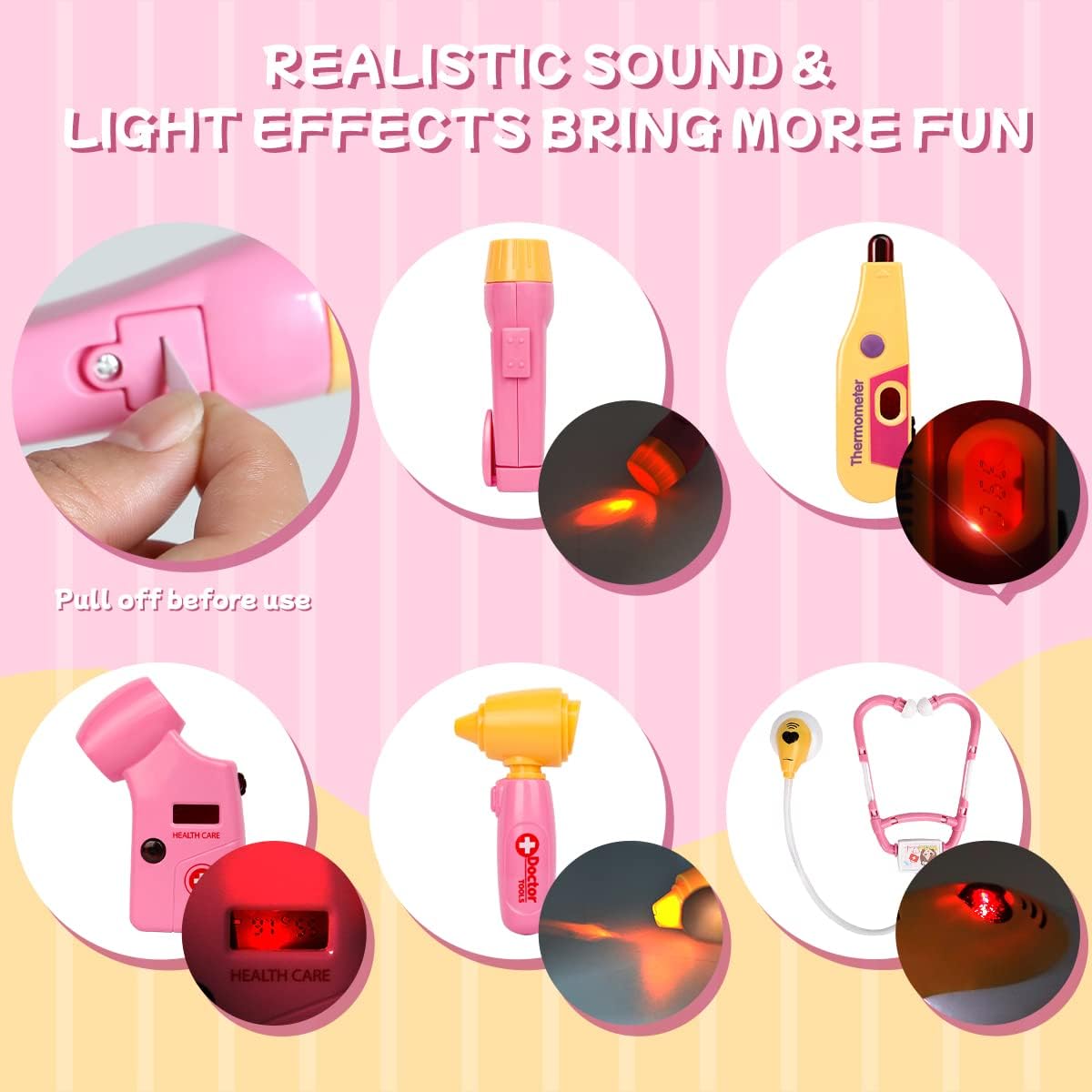
- Sound operation: The listing describes sound from the toy stethoscope and an adjustable thermometer. Check whether batteries are needed, whether they are included, and how the sound is activated.
- Materials and cleaning: The available text does not identify materials or provide care instructions. Look for those details if the toy will be shared or used frequently.
- Storage: The listing describes a portable carrying case. Confirm its size, closure, and whether it can hold all of the accessories after play.
Play and learning considerations
Pretend medical play can give children a structured setting for inventing dialogue and routines: greeting a patient, asking what happened, examining a toy, and deciding what to do next. With this product, the puppy doll may make those scenes more approachable for a child who prefers animal stories. An adult can follow the child’s lead by asking open-ended questions such as, “What does the puppy need?” or “Which tool would you like to use?”
The listing promotes confidence, empathy, communication, and healthy-knowledge learning. Those are claims from the listing, not results established by independent testing, and families should not treat the kit as medical instruction or a substitute for real health guidance. The tools are toys, and children may interpret them differently depending on age and experience.
Caregivers can keep the activity grounded by explaining that real medical tools are used only by trained professionals and that pretend play is different from an actual examination. If a child has anxiety about doctor visits, the set might provide a way to talk about appointments, but it should not be presented as a guaranteed method for reducing fear. Avoid forcing a child to participate in medical scenarios or to wear the costume.
Safety, supervision and care
Read the current warning label before giving the set to a child. Keep supervision appropriate to the child’s age, habits, and the specific accessories supplied. The listing names items such as scissors, tweezers, eyeglasses, a syringe, and a flashlight; caregivers should inspect each item and explain that none is for use on a person or animal.
- Do not allow children to insert toy tools into mouths, ears, noses, or other body openings.
- Do not use the syringe or other accessories with medication, liquids, or real medical equipment.
- Keep the puppy doll and accessories away from pets if pieces could be chewed, swallowed, or pulled loose.
- Check sound-producing items and battery compartments if the set requires batteries; follow the current instructions.
- Inspect the coat, hat, case, and tools periodically for loose parts, sharp edges, cracks, or damage.
- Store the set where younger children cannot access small accessories without supervision.
Use only the cleaning method recommended for the actual materials. Since the supplied listing does not identify those materials, avoid assuming that every component is washable or suitable for soaking. Separating the accessories from real medical supplies can also help children understand the boundary between pretend equipment and items used for health care.
Editorial conclusion
The Meland Toy Doctor Kit is presented as a dress-up pretend-play set with a puppy patient, a doctor costume, a carrying case, and toy tools for doctor and veterinarian scenarios. Its appeal is likely to depend on the child’s interest in role-play, animals, costumes, and organizing props. The available information leaves important questions about exact contents, materials, sizing, sound operation, and age guidance, so those details deserve attention before purchase.
Confirm the current contents, warnings, sizing, battery information, and care instructions with the manufacturer or seller. Cerebus Art did not perform an independent hands-on test of this product.
Reviews
There are no reviews yet.